Don't be fooled by Elden Ring: Nightreign's status as a standalone expansion. Lore enthusiasts will find a deep well of narrative to explore. Like a towering branch of the great Erdtree, Nightreign grows from the same roots, presenting an alternate timeline within the Elden Ring universe. It introduces fresh concepts and characters, even though its events don't directly connect to the original game's story. The meaning of this distinction becomes clear as we delve into the ending explained below.
Warning: This article contains major spoilers for the ending of Elden Ring: Nightreign.
Is Nightreign Canon to Elden Ring?
Nightreign bends the history of The Lands Between onto a different path, forking from a pivotal moment in the lore to envision a far darker outcome. It's best understood as an alternate timeline rather than canonical storyline. While prior knowledge of Elden Ring isn't essential, fully appreciating Nightreign requires significant time spent on expeditions and battling Nightlords. This journey reveals how Nightreign connects to—and diverges from—the core narrative of the Lands Between.
Elden Ring: Nightreign Ending Explained
The introductory cutscene establishes a crucial divergence: Nightreign unfolds in a world where the Tarnished never arrive. The god-war known as The Shattering erupts after Queen Marika shatters the Elden Ring, plunging the Lands Between into chaos. Millennia pass with no ruler claiming the throne, an emptiness that eventually draws a cataclysmic entity known as the Nightlord. This being is a walking natural disaster; where it treads, the endless Night follows, a corrosive downpour that slowly dissolves reality itself.
True to FromSoftware's style, this timeline proves even bleaker than the original. Here, the Elden Throne sits empty amidst fading ruins, with nothing left to rule or conquer. Yet, a peculiar group, the Nightfarers, are summoned by an unknown patron to defy the inevitable, tasked with defeating the Nightlord and ending the eternal Night.
This is the player's role. Nightfarers cooperate to hunt lesser Nightlords, descending upon the remnants of regions like Limgrave to battle familiar foes from both Elden Ring and the Dark Souls series. The game doesn't explicitly explain this convergence, but it can be interpreted as ruptures in a reality collapsing in on itself.
Elden Ring: Nightreign Review Screenshots
View 121 Images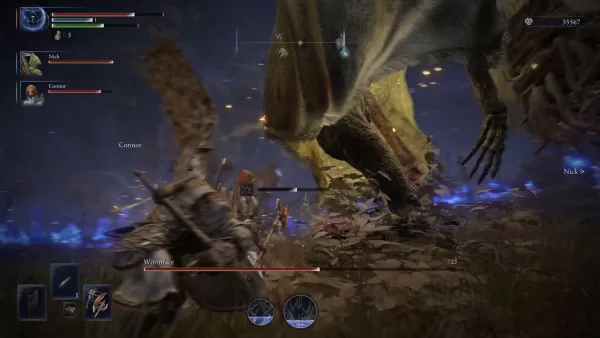
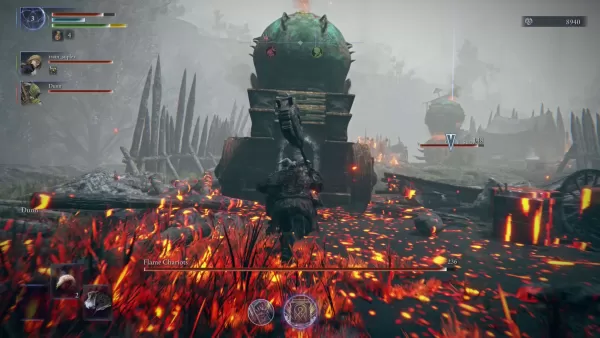
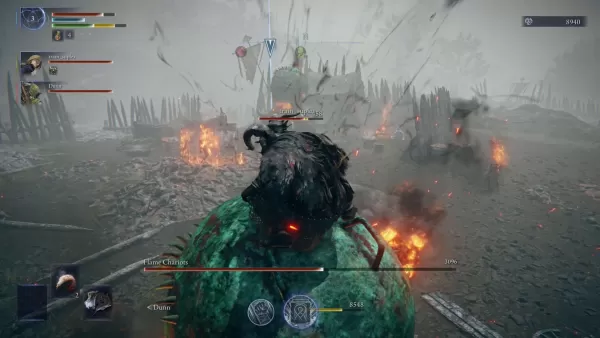
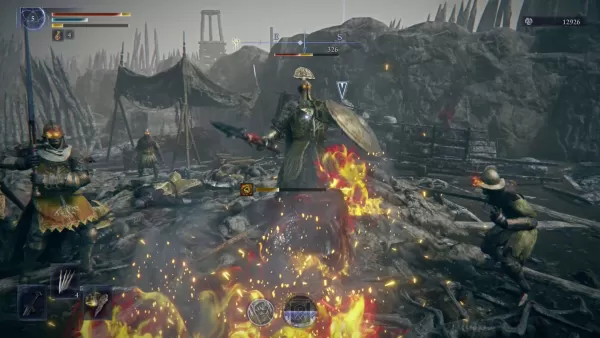
After defeating enough Nightlords, the true source is revealed: Heolstor, a desiccated husk of a man wielding a sword reminiscent of Dark Souls' Moonlight Greatsword in one of his three arms. This spectacular boss fight culminates in earning the Primordial Nightlord's Rune, akin to a Great Rune but steeped in darkness.
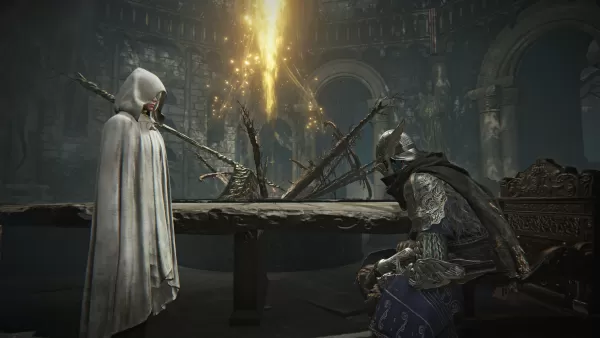
Normally, victory returns you to allies at the Roundtable Hold. Defeating Heolstor, however, leaves you before a long-abandoned Hold. A petrified corpse sits within; placing the rune before it causes your Nightfarer to dissolve into strands of light that ascend into the sky.
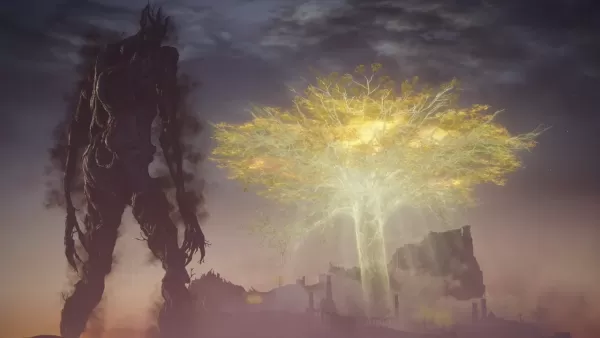
A post-credits scene shows the familiar Lands Between from Elden Ring, the Erdtree standing tall with golden leaves drifting. One leaf lands on a branch of a colossal, wooden giant resembling Heolstor. It rises from the sea, glances toward the Erdtree, and then strides away.
This strongly implies that by defeating Heolstor, you have retroactively prevented the Night from ever beginning. In essence, you have severed Nightreign's alternate branch from the story tree, allowing the events of the original Elden Ring to proceed unchanged.
Who is Heolstor? Exploring the Alternate Endings
Little is known of Heolstor beyond the relic obtained from him. It tells of a knight slain by a hero, who later awoke to curse the world. This vagueness invites interpretation, but the most compelling suggests he is a cosmic inevitability—a natural force as certain as sunset.
This theme aligns with the alternate ending available to the Wylder character upon completing his remembrance quests. Instead of erasing the timeline, the Wylder uses a Larval Tear—an item linked to rebirth—to assume the Nightlord's mantle. His quest reveals the Roundtable Hold's existence is tied to the Nightlord, and his sister, the Duchess, is bound to the same fate. He sacrifices himself to the Night to ensure her survival.
In Ironeye's unique ending, he slits the throat of the petrified corpse in the empty Hold, deliberately prolonging the Night. His aim is to protect his clan of undying warriors—Those Who Live in Death from Elden Ring. In the main timeline, they are hunted by Erdtree followers; Ironeye's choice spares them this persecution but dooms the wider world.
The Recluse's ending is the second most hopeful. Her remembrance reveals she once abandoned a child, which succumbed to an insatiable hunger, even consuming her own sister. After Heolstor's defeat, the Recluse finds this Night-touched infant in the Hold and embraces it. Her love soothes the child, seemingly halting the birth of a new Nightlord.
The remaining Nightfarers lack special endings. Their stories conclude with the default ending, likely fading with the erased timeline. However, Nightreign's tale continues: FromSoftware plans to release new Nightfarers as DLC, potentially offering further insight into this sorrowful world through their own unique conclusions.






















![City Devil: Restart [v0.2]](https://img.icssh.com/uploads/38/1719554737667e52b102f12.jpg)